
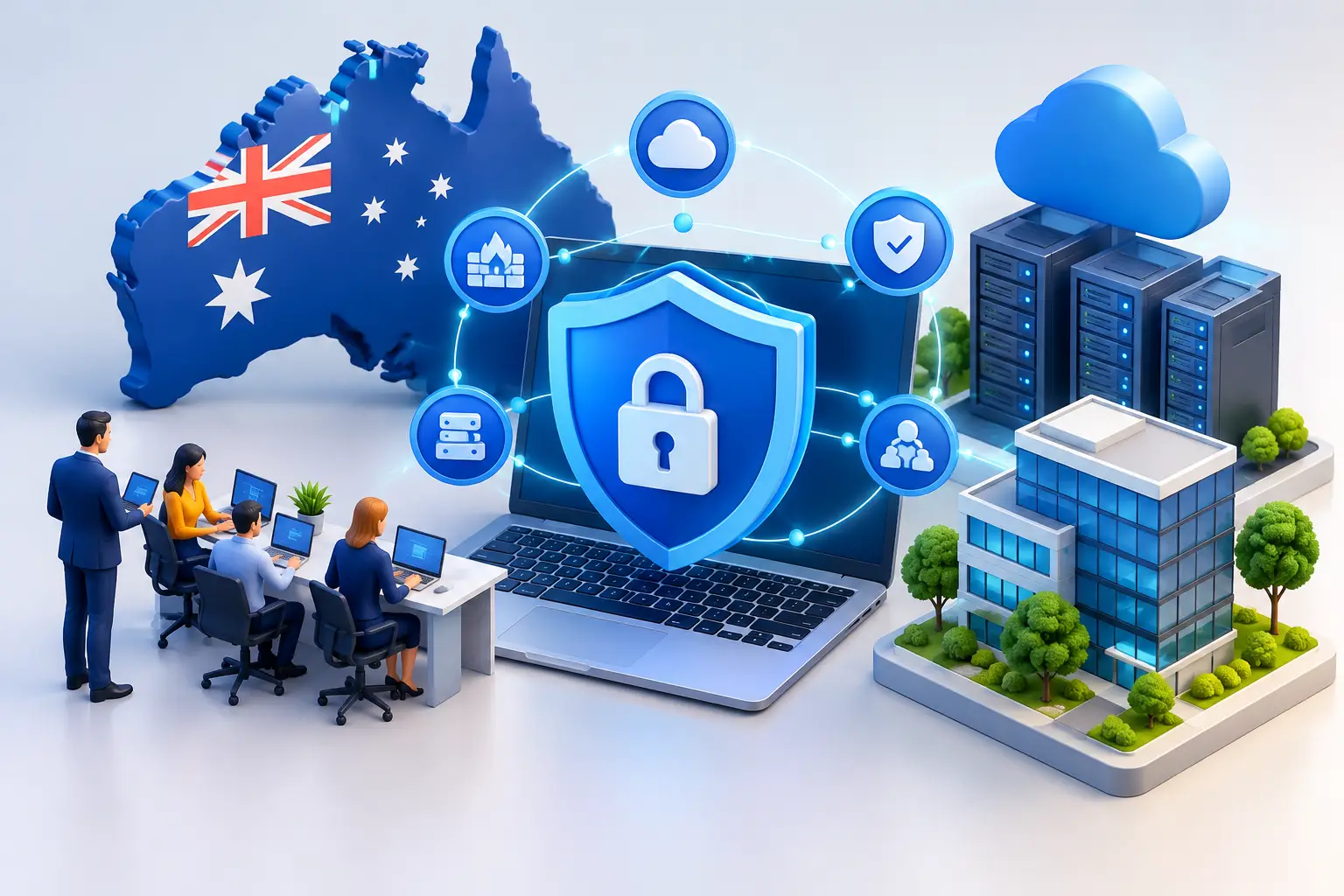
A suspicious invoice lands in accounts. A team member enters their password into a convincing sign-in page. A laptop goes missing on a work trip. For a small business, any one of these events can quickly become a costly disruption. Managed cyber security services give Australian businesses practical protection and experienced oversight without needing to build a full in-house security team.
For organisations that depend on internet connectivity, cloud applications, mobile staff and business phones, cyber security is not separate from day-to-day operations. It is part of keeping customers served, staff productive and critical systems available. The right managed service helps identify risks early, respond decisively and make sensible improvements over time.
What managed cyber security services actually do
Managed cyber security services place ongoing security monitoring, management and support in the hands of a specialist provider. Rather than installing a firewall or antivirus product and hoping it remains effective, your business has people and tools working together to maintain protection.
The exact scope varies. A straightforward service may focus on managed firewall protection and endpoint security for business computers. A broader service can include monitoring for suspicious activity, email protection, security updates, incident response support, user access controls and reporting for management.
This distinction matters. Cyber security products are valuable, but a product alone does not investigate an alert at 2 am, check whether a new remote connection is legitimate or help contain a compromised account. A managed service adds the operational layer that turns technology into an active defence.
For Australian businesses, local support also changes the experience. When an incident affects internet access, cloud systems or phones, you need clear communication from people who understand your setup and can work with your connectivity provider. Waiting for an overseas helpdesk while staff cannot access core systems is rarely a workable continuity plan.
Why businesses are choosing managed cyber security services
Cyber threats are no longer limited to large corporations. Attackers often target smaller organisations because they may have fewer internal controls, shared administrator passwords, ageing hardware or limited time to review alerts. Phishing, credential theft, ransomware and business email compromise can all start with one ordinary-looking interaction.
At the same time, the typical business network has expanded. Staff work from home, access software in the cloud, use mobile devices and connect from multiple sites. A regional office may use fixed wireless or satellite, while a head office runs on fibre and employees connect from home NBN services. Each connection can be essential to the business, but each needs sensible controls.
A managed approach is particularly useful when internal IT staff are already focused on supporting users, deploying devices and keeping core systems running. Security monitoring demands a different kind of attention: reviewing alerts, understanding normal network behaviour and responding before a small issue spreads.
It is not always necessary for a small business to buy every advanced security service available. The right level depends on the data you hold, the applications you rely on, your compliance obligations and the financial impact of downtime. A local trades business, a medical practice and a multi-site professional services firm face different exposures. What they share is the need for a clear plan that matches risk to budget.
The building blocks of an effective service
Managed firewall and network protection
A business-grade firewall controls traffic entering and leaving your network. When managed properly, it is configured for your applications, updated as threats change and reviewed when new sites, staff or cloud services are added.
This is more than blocking unwanted traffic. It can help separate guest Wi-Fi from business systems, apply safer access rules for remote workers and provide visibility into unusual network activity. For a multi-site business, central management also makes it easier to apply consistent policies across locations.
Endpoint protection for computers and devices
Endpoints are the laptops, desktops and servers your people use every day. Endpoint protection looks for malicious files, suspicious behaviour and unauthorised changes that traditional antivirus may miss.
Management is just as important as detection. Devices need security updates, protection policies and visibility even when they are working away from the office. If a device is lost or compromised, your provider should be able to help isolate it quickly and reduce the chance of wider access.
Email and identity security
Email remains a common route into Australian businesses. Attackers impersonate suppliers, directors and Microsoft 365 sign-in pages to steal credentials or redirect payments. Effective protection combines email filtering with stronger account controls, including multi-factor authentication and careful management of administrator access.
There is a trade-off here: tighter controls can add a small amount of friction for users. That friction is usually far less disruptive than recovering from a compromised email account. The aim is to make secure behaviour the easy, repeatable option.
Monitoring and incident response
Security alerts are only useful when someone can interpret them. Ongoing monitoring helps distinguish a genuine threat from normal business activity, then guides the appropriate response. That might involve disabling an account, blocking a connection, isolating a device or helping your team restore safe access.
Before an incident occurs, ask what support looks like in practice. Who contacts you? What is covered after hours? How are urgent actions approved? A service provider should explain these processes in plain language, not hide them in a technical proposal.
How to choose a provider that fits your business
Start with your business operations, not a list of security features. Identify the systems that cannot be unavailable for long: cloud accounting, customer records, point-of-sale systems, phones, file access or production equipment. Then consider who needs access, where they work and what information would cause harm if exposed.
A capable provider should assess your existing environment before recommending a package. That includes your internet connections, Wi-Fi, firewall, cloud platforms, devices and backup arrangements. Security works best when it is planned alongside the network, rather than bolted on after deployment.
Look for clear service boundaries as well. Ask whether hardware, licensing, monitoring, remediation and after-hours assistance are included. Confirm who owns the configuration, how often it is reviewed and how reporting will help you make decisions. A monthly report full of unexplained technical terms is less useful than a clear view of incidents, actions taken and recommended priorities.
For businesses with multiple locations, consider whether the provider can support the whole environment. Combining connectivity, SD-WAN, managed firewalls, cloud phone systems and endpoint security can reduce hand-offs between vendors when something goes wrong. InfiNET Broadband supports this kind of joined-up approach, pairing dependable business connectivity with managed security and local Aussie support.
Security still needs your people
Managed services reduce pressure on internal teams, but they do not remove every responsibility. Staff still need to verify unexpected payment requests, use unique passwords and report suspicious messages quickly. Leaders need to decide who should have access to sensitive systems and ensure departing staff are removed promptly.
Short, regular awareness training is generally more effective than a once-a-year presentation. Use examples relevant to your workplace, such as fake supplier invoices, parcel notifications or requests to reset Microsoft 365 credentials. Make reporting easy and blame-free. The sooner someone flags a suspicious message, the more options you have.
Backups also deserve attention. A backup is only useful if it is protected from the same incident and can be restored within a timeframe your business can tolerate. Test restoration, document responsibilities and include key cloud data rather than assuming every platform will recover it for you.
Make cyber security part of business continuity
The strongest cyber security decisions are usually practical ones. They protect the systems your team needs, make it harder for attackers to gain a foothold and give you a clear response path when something unusual happens. They also recognise that no service can promise zero risk.
Choose managed cyber security services that suit your business today and can grow with your operations. With the right connectivity, well-managed protections and responsive support behind you, your team can spend less time worrying about threats and more time serving customers.