
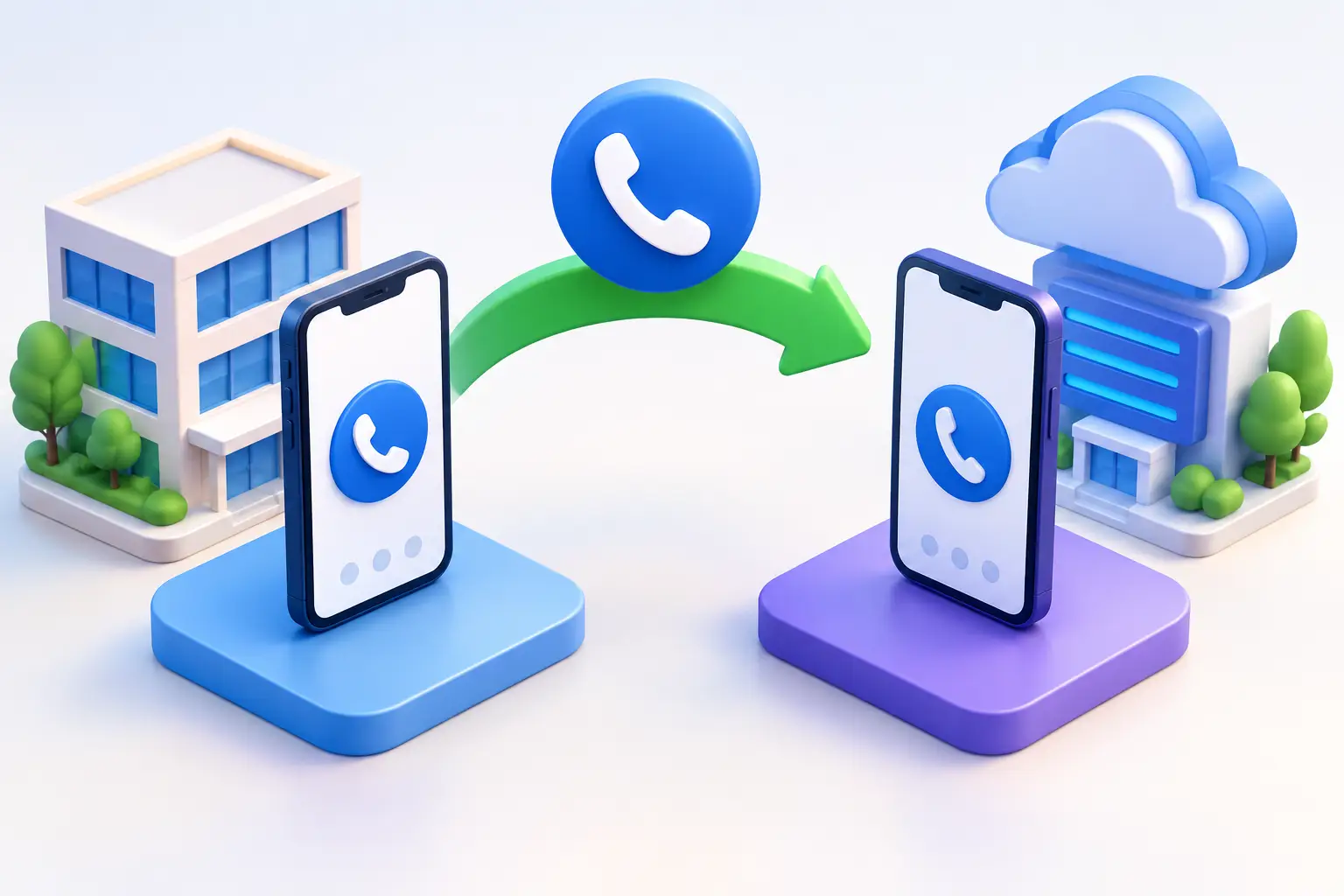
Your phone number is printed on invoices, stored in customer mobiles, listed in online directories and known by suppliers. Business phone number porting lets you move that number to a new provider or phone system without asking every customer to update their records. For many Australian businesses, that continuity is reason enough to plan the change carefully.
A port is not simply an administrative task. It is a coordinated change to a service your team relies on for sales, bookings, support and day-to-day operations. With the right information and a realistic cutover plan, it can be managed with minimal disruption.
What business phone number porting means
Business phone number porting is the process of transferring an existing fixed, VoIP or, in some cases, mobile number from one carrier or service provider to another. The number remains yours to use, while the underlying carrier and phone platform change.
A common example is a business replacing an older office phone system with cloud PBX and VoIP services. Rather than start again with new numbers, the business ports its main number, direct-in-dial numbers and fax or alarm lines where compatible. Customers continue calling the familiar number, but calls can now ring a desk phone, a mobile app, a reception group or a team in another location.
Porting can also make sense when a business is changing internet providers, consolidating multiple sites, moving offices or seeking a provider that can support both connectivity and communications. The key point is that changing providers does not automatically mean changing the number customers know.
Why keeping the number matters
A familiar number carries more value than it may appear to on a phone bill. It is part of how people find and trust your business. A local trades business may receive repeat work from callers who saved its number years ago. A medical practice or professional services firm may have its main number embedded in referral systems and client records. A multi-site company may depend on one published number that routes calls to different states or teams.
Changing that number can create avoidable friction. Even with a careful communication campaign, some customers will call the old service, read outdated signage or use a saved contact. Porting reduces this risk and lets your business improve its communications setup without creating a public-facing change at the same time.
There are operational benefits too. Modern phone systems can give smaller teams capabilities once associated with larger call centres, including call queues, after-hours routing, voicemail-to-email, auto attendants and reporting. Porting lets you access those features while keeping the front door familiar to callers.
Check the number can be ported before making plans
Most active business numbers can be ported, but eligibility depends on the number type, current service arrangement and the destination service. A fixed number is generally tied to its geographic area, so location and numbering rules can affect what services it can move to. Complex arrangements may also need additional checking.
Before lodging a request, confirm exactly which numbers you need to retain. This may include the main reception number, individual direct numbers, hunt groups, fax lines, EFTPOS dial-up services, lift emergency phones, security systems and monitored alarms. Not every service will work in the same way on a new VoIP platform, and some may need a separate solution.
It is also worth confirming who holds the account with the existing provider. The legal business name, ABN or ACN, service address and account number should match the current carrier’s records. Minor inconsistencies, such as an old trading name or a missing unit number, are a frequent cause of port delays or rejections.
Do not cancel your existing phone service before the port is complete. Cancelling first can disconnect the number and may make recovery difficult. Your new provider will usually coordinate the port request, while the old service remains active until the agreed cutover.
Understand number ownership and service dependencies
Businesses sometimes assume a number belongs to whoever pays the invoice. In practice, the number may be supplied under a wholesale arrangement, held by a previous IT provider or associated with a bundled service. Establishing the authorised account holder early avoids surprises.
Also consider what is attached to the number. If the main line is used for an alarm panel or emergency call device, speak with the equipment provider before changing services. VoIP relies on power and an internet connection, so a suitable backup plan may be needed for services that must remain available during a local outage.
Prepare for a smooth port
The best ports are usually the least dramatic because the preparation happened well before cutover day. Start by documenting your current call flow. Identify where the main number rings, which staff receive overflow calls, what happens after hours and whether certain departments use their own direct numbers.
Your new system should be configured and tested before the number moves. That includes handsets, mobile and desktop apps, call queues, voicemail greetings, auto attendants and voicemail notifications. If your team works across offices or from home, test calls over each relevant internet connection rather than assuming one successful test covers every location.
Choose a porting window that suits the business. A retail venue may prefer a quiet weekday morning; a professional office might schedule the change outside client-facing hours. Businesses with high call volumes should arrange temporary call handling during the window, such as forwarding calls where possible or having staff ready to return missed calls promptly.
A clear internal message helps. Tell staff when the change is happening, what will look different and who to contact if calls do not behave as expected. Reception and customer service teams should know how to place calls, transfer them, retrieve voicemail and use fallback contact methods.
What happens on porting day
On the agreed date, the gaining provider submits or completes the transfer according to the approved porting process. The old service and new service may overlap briefly, or there may be a short period where inbound calling is unavailable while routing updates. The duration varies based on the number type and complexity of the request.
Once the number is active on the new system, test it from several external services, including a mobile and another fixed service where possible. Check inbound calls, outbound caller ID, transfers, voicemail, call queues and after-hours messages. If you operate multiple sites, test the intended routing from each location.
Keep a record of the results and raise any issues immediately. Fast reporting gives the provider the best chance to investigate while the port activity is recent. It is also sensible to leave old handsets connected until you have confirmed they are no longer receiving calls, particularly where there are several numbers or a more complex service arrangement.
Avoid the common causes of delay
Most porting problems are preventable. Incorrect account details are the most common issue, followed by unauthorised requests, cancelled services and incomplete number lists. A port can also be delayed when a number is part of a more complicated product bundle or when the requested service is not compatible with the destination setup.
Avoid submitting a request based on an old invoice if your business has changed name, moved premises or updated its billing contact. Check details directly with the current provider first. If you have recently changed ownership or have multiple entities within a group, make sure the correct authorised representative signs the porting authority.
Be cautious with dates as well. A rushed port ahead of an office move, end-of-lease deadline or busy seasonal period leaves little room to resolve exceptions. Where continuity is critical, allow enough lead time for validation, system setup and testing. A slightly later cutover is generally better than a rushed one that interrupts customer calls.
Choose more than a replacement phone line
Porting is a chance to assess whether your communications service supports the way your business actually works. The lowest monthly price may not be the best fit if it comes with limited support, unclear fault handling or a system that cannot grow with your team.
Consider call quality, support availability, internet reliability, backup options and the ability to add users or locations. For businesses using cloud PBX or SIP services, the quality of the underlying connection matters. A properly sized business internet service, suitable network equipment and sensible quality-of-service settings can make a real difference to voice performance.
For organisations with several sites, a single provider that understands internet, business telephony and network design can simplify fault finding. InfiNET Broadband can help Australian businesses bring reliable connectivity and business communications together, with local support available when the details matter.
Your number has already done the hard work of becoming familiar to customers. Keep it, plan the change around your operations and use the move to build a phone system that makes every call easier to answer.