

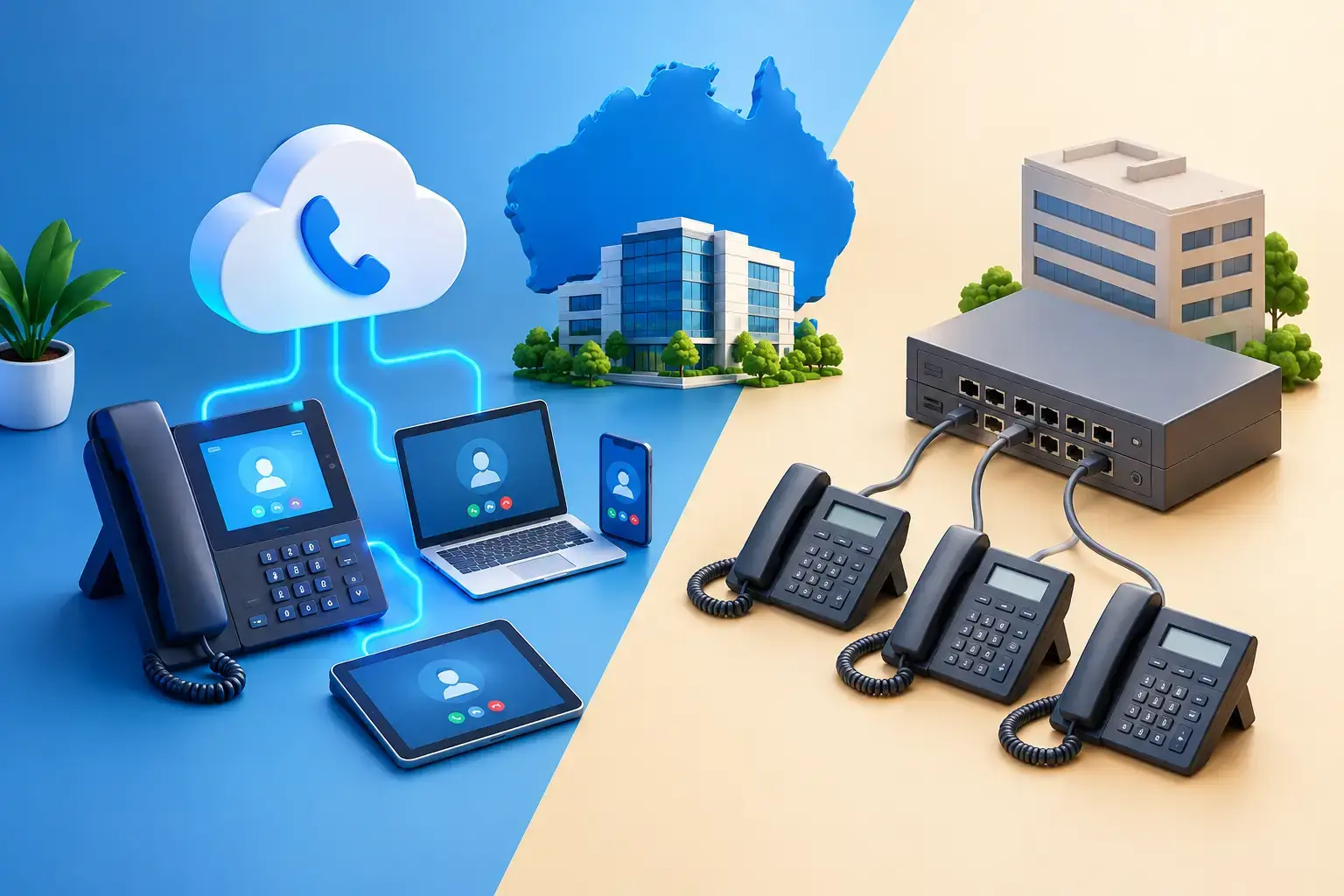
A phone system can be working perfectly at 9 am and become the day’s biggest operational problem by 9:05. For Australian businesses reviewing SIP trunk vs ISDN, the real question is not which technology sounds more familiar. It is which option keeps your team reachable, supports the way you work, and will still make sense as older phone networks are withdrawn.
ISDN was the standard for business telephony for many years. It gave offices dedicated digital phone lines and predictable call capacity. SIP trunks take a different approach, carrying voice calls over an internet connection rather than separate ISDN infrastructure. For most organisations, that shift brings greater flexibility and a clearer path to cloud-based communications, but it needs the right internet service and a properly planned setup.
SIP trunk vs ISDN: the practical difference
ISDN, short for Integrated Services Digital Network, uses dedicated telephone lines to connect a business phone system to the public telephone network. A service is generally configured with a set number of channels, with each channel supporting one concurrent call. If your business has 10 channels, it can make or receive 10 calls at once.
A SIP trunk uses Session Initiation Protocol to connect your PBX or cloud phone platform to the phone network over IP. Instead of installing additional physical phone lines as call volumes grow, a provider can usually add call paths through the service configuration. This makes SIP especially useful for businesses with seasonal demand, growing teams, multiple locations, or staff working from home.
The distinction matters because ISDN is legacy technology. Availability and withdrawal timelines can vary by service type and location, but Australian businesses should not treat existing ISDN services as a long-term communications strategy. A planned move gives you more control than a rushed change prompted by a network deadline or fault.
Why businesses are moving from ISDN to SIP trunks
The most visible benefit of SIP is flexibility. With ISDN, call capacity is tied to the physical service ordered for the site. Increasing capacity can involve lead times, technician work and added line rental. SIP trunks are generally easier to scale, whether you need a few additional channels for a busy period or a larger allocation as your organisation expands.
SIP can also reduce complexity across multiple premises. An office in Perth, a warehouse in regional Victoria and remote staff in different states can operate under one phone solution, with direct numbers, call routing and reporting managed centrally. Calls can be delivered to desk phones, softphones on laptops or mobile apps, depending on the phone system selected.
This is not simply a cost conversation. While SIP often lowers ongoing line costs and can make calls more economical, the bigger gain is operational. A business can redirect calls during an outage, move a team to a new location without leaving numbers behind, or add a new site without building a separate traditional voice environment.
For businesses adopting cloud PBX systems, SIP is also the natural fit. Features such as auto attendants, call queues, voicemail-to-email, call recording and flexible hunt groups are easier to manage when voice is part of the wider IP network.
Call quality depends on the connection
ISDN has a reputation for reliability because it operates separately from the office internet service. SIP call quality, by comparison, is influenced by the network carrying it. That does not make SIP unreliable. It means the underlying connection, local network and configuration matter.
A stable business-grade connection with suitable upload capacity, low latency and sensible traffic management can deliver excellent voice quality. Problems arise when voice shares an overloaded connection with large uploads, cloud backups, video meetings and guest Wi-Fi, without any prioritisation.
Quality of Service, often called QoS, can prioritise voice traffic so calls remain clear when other applications are busy. For higher-dependency sites, separate voice and data connections, managed routers or a secondary service can provide additional protection. The right design depends on how damaging a missed or poor-quality call would be to your operation.
Cost, capacity and control
An ISDN service may look straightforward on a monthly bill, but it can be less efficient when your call requirements change. Businesses can end up paying for unused channels, or waiting to add capacity when an opportunity demands faster action. Hardware maintenance and ageing PBX equipment can add further cost over time.
SIP pricing is typically based on the number of concurrent call paths, included calls or call rates, and the features attached to the wider phone solution. The best option is not always the one with the lowest advertised price. Check what is included, how extra call paths are charged, whether number porting is covered, and what support is available if a critical service issue occurs.
SIP also gives administrators more day-to-day control. Changes to call forwarding, business hours, queue settings and user access can often be made through an online portal or by a support team, rather than waiting for physical line changes. That is valuable for lean businesses where people wear several hats and cannot afford lengthy telecommunications administration.
When ISDN may still be in place
Some organisations still have ISDN because it is connected to an established on-premises PBX, specialist equipment or a location where communications alternatives have historically been limited. If it is currently meeting your needs, there is no need to create disruption for its own sake.
However, leaving migration until the last minute can create avoidable pressure. Number porting, PBX compatibility, internet upgrades and staff training all take time. There may also be analogue devices to review, such as alarms, EFTPOS terminals, lift phones, fax machines or emergency lines. These are not always covered by a standard SIP migration and may need separate solutions.
For sites with challenging connectivity, fixed wireless, private fibre, satellite or a backup mobile service may form part of the answer. The appropriate option depends on coverage, contention, application needs and the level of redundancy required. A proper assessment is more useful than assuming every location needs the same service.
Planning a move to SIP without disrupting calls
A successful transition starts with a clear picture of how your business uses phones. Count concurrent calls during busy periods, not just the number of handsets on desks. Review where calls go, which numbers matter most, and whether remote staff need the same access as office-based teams.
Then assess the existing phone system. Some on-premises PBXs can work with SIP through compatible hardware or licensing. Others are expensive to adapt and may be better replaced with a cloud PBX. A cloud platform can reduce the reliance on site-based equipment, although it also makes internet resilience more important.
Before porting numbers, confirm the account details precisely match the current carrier records. Incorrect business names, addresses or account information can delay the process. Plan the cutover outside your peak trading hours where possible, and set up call forwarding or contingency arrangements so customers can still reach you if timing changes.
It is also worth testing the basics that are easy to overlook: inbound and outbound calls, caller ID, call transfer, voicemail, emergency calling details, reception workflows and mobile apps. Give staff a simple guide before the change, particularly if they are moving from physical handsets to softphones or a new cloud interface.
Choosing the right fit for your business
For most Australian businesses, SIP is the more flexible and future-ready choice. It aligns with cloud applications, supports distributed teams and avoids further investment in legacy voice infrastructure. But SIP should be treated as part of your wider connectivity plan, not as a stand-alone phone purchase.
If your business relies heavily on phones, choose a provider that can assess both voice and internet performance, explain resilience options in plain language and provide local support when service continuity matters. InfiNET Broadband can help businesses bring reliable connectivity and business telephony together, rather than leaving teams to coordinate multiple providers when something goes wrong.
The best time to review your phone environment is while it is still stable. A measured move from ISDN to SIP lets you protect important numbers, improve how calls flow through the business and build a communications setup that can keep pace with what comes next.